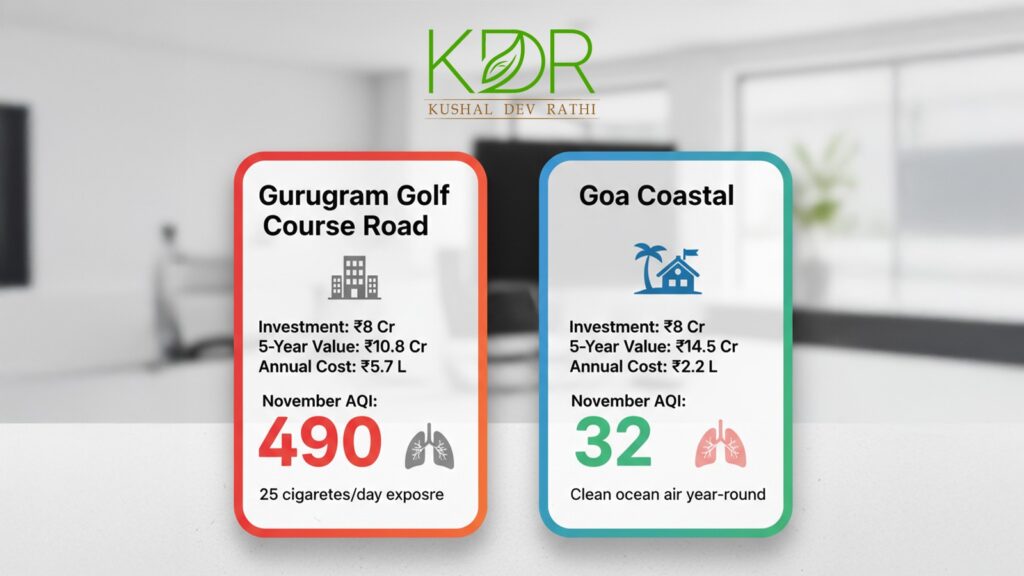

When the Price of a 2BHK Equals the Price of an Entire Ecosystem (Farmland Is the New Asset in India)
There is a moment I often return to — a single conversation that somehow explains India’s entire shift in wealth psychology.
It was a hot afternoon in North Goa. A couple from Delhi visited one of our land ecosystems. They were bright, hard-working, successful — the kind of people who had done everything “right”: saved money, invested in SIPs, worked long hours, and finally reached the familiar milestone:
“We are planning to book a 2BHK in Noida.”
Later, as we walked across a 2-acre farmland parcel with mature trees, freshwater channels, and a half-done farmhome structure, they asked — almost casually:
“How much does this cost?”
When I told them it would cost about the same as their 2BHK, everything in their body language shifted.
They stood in silence.
They listened to the wind.
They looked at each other.
And then they asked the question so many Indians are secretly starting to ask:
“Are we crazy to buy an apartment when we can buy a whole world for the same price?”
That day, I realised something India has not yet said aloud:
We have reached the moment where a farmhome can cost the same as an apartment — and often offers 10 times the life.
This is not a privilege anymore.
This is not a fantasy.
This is not off-grid escapism.
This is a market reality, and it is one powerful reason why farmland is the new asset in India.
In this essay, I want to dissect this shift through every lens — economic, cultural, ecological, psychological, and philosophical — the way I have observed it for over two decades of working with land.
Why the Apartment Dream Is Collapsing Under Its Own Weight
The Apartment Bubble No One Wants to Admit
Let’s begin with the uncomfortable truth:
Apartments in India’s big cities have reached a point where prices no longer reflect value — they reflect pressure.
A typical 2BHK in a metro like Delhi, Mumbai, Bangalore, or Pune now runs anywhere between:
- ₹90 lakh to ₹2 crore (depending on location and amenities)
For reference:
Knight Frank’s 2024 report shows that urban micro-markets in India are flattening, with appreciation slowing down due to saturation.
Meanwhile, Times of India reports farmland in many regions appreciating 12–20% annually.
When the slowest asset outperforms the fastest, something fundamental is shifting.
And that shift is why farmland is the new asset in India.
What We Actually Pay For in an Apartment
People say they are “buying property.”
But in reality, you are buying:
- A fraction of land (shared by hundreds)
- A container of concrete
- Airspace, not earth
- Depreciation disguised as lifestyle
- A view into someone else’s living room
- Noise you didn’t ask for
- A future maintenance headache
You don’t own the roof.
You don’t own the ground.
You don’t own the sky.
In other words:
You pay for freedom and get restriction.
Meanwhile, a farmhome gives you:
- Earth beneath your feet
- Sky above your head
- Water flowing through your land
- Trees you can plant, grow, and harvest
- Food you can produce
- Space for a life beyond productivity
Which one feels like wealth?
This is why farmland is the new asset in India — because families are choosing space over square feet, nature over noise, and autonomy over anxiety.
The Price Paradox: A Farmhome Costs the Same as a 2BHK
India’s Most Surprising Real Estate Trend
Across India — in Goa, Himachal, Coorg, Rajasthan — one pattern is emerging:
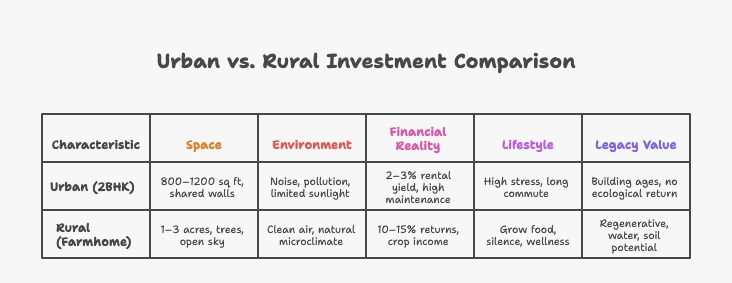
The price of 1–3 acres of farmland ≈ the price of a 2BHK in a metro.
Let’s break down the numbers:
Asset | Price | What You Get |
Urban 2BHK | ₹80 lakh–₹2 crore | 800–1200 sq ft, shared walls, monthly maintenance, zero land |
Farmhome | ₹80 lakh–₹2 crore | 1–3 acres, trees, water, freedom, silence, microclimate, autonomy |
This is not exaggeration.
This is the market in 2025.
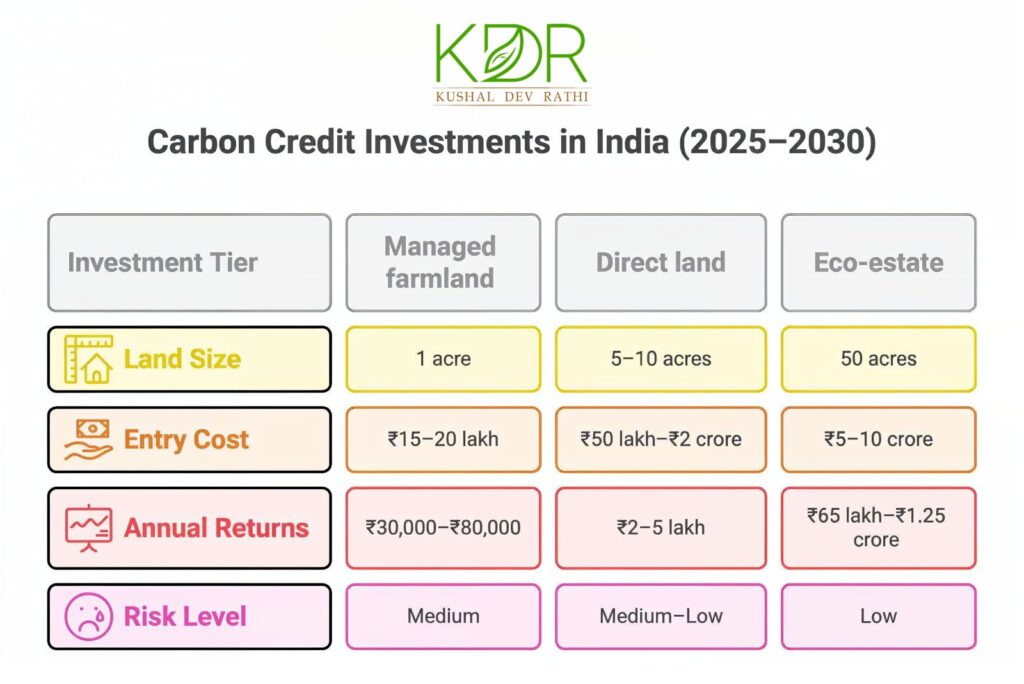
Managed Farmlands: Lower Cost, Higher Returns
Mint reports managed farmlands generating 10–15% annual returns, depending on crop and operator.
Economic Times Wealth confirms the same, with a 4x rise in demand post-pandemic.
Which means:
A 2BHK gives you EMI.
A farmhome gives you ROI.**
That is why farmland is the new asset in India.
The Emotional & Cultural Reversal: Indians Want Soil Again
The Pandemic Reset Our Instincts
When India saw migrant workers walk home, when shelves ran short of essentials, when cities felt fragile — something deep shifted in our collective subconscious.
We realised:
- Food comes from farmers, not apps
- Oxygen comes from trees, not cylinders
- Peace comes from silence, not screens
And suddenly, owning land wasn’t an old-fashioned idea — it was a future-proof one.
FAO’s global food security outlook shows rising agricultural volatility.
RBI’s data shows high food inflation.
When food becomes volatile, farmland becomes valuable.
That is why farmland is the new asset in India — because scarcity changes priorities.
The Lost Indian Dream Was Never an Apartment — It Was Land
Ask anyone above 50 what real wealth meant to their parents.
They will say:
- Land
- Cows
- Trees
- Water
- Community
- Orchards
Not marble floors.
Not penthouse balconies.
Not modular kitchens.
Somewhere, in the rush to urbanise, we forgot the original Indian wealth philosophy:
Wealth is what grows, not what shrinks.
This is why a farmhome at the price of an apartment is not a trend — it is a return to a deeper memory.
Governance: India Is Making Farmland Safer Than Ever
4.1 95% of Rural Land Records Are Digitised
Under the DILRMP initiative, India has digitised most rural land records.
This dramatically reduces title risks.
For decades, the fear around farmland was informational — not actual.
Now, that fog has lifted.
States Are Opening the Doors
ET Realty reports that states like:
- Karnataka
- Telangana
- Tamil Nadu
- Rajasthan
…have eased farmland purchase norms under certain rules.
Urban Indians finally have safe pathways to owning rural land.
NABARD Is Rebuilding India’s Agricultural Backbone
NABARD’s reports highlight investments in:
- Micro-irrigation
- Agroforestry
- FPO strengthening
- Watershed development
When agriculture strengthens, farmland appreciates.
This is yet another reason farmland is the new asset in India.
The Climate Advantage: Land Survives What Buildings Cannot
Climate Vulnerability Is Real
CEEW reports that 75% of Indian districts are climate-vulnerable.
Heatwaves, water scarcity, unpredictable rains — these are shaping future real estate value.
Apartments cannot adapt to climate.
Farmland can.
Water Will Define Wealth in the 2030s
The World Bank warns that India’s water stress will intensify.
In this reality:
- Land with water becomes priceless
- Land without water becomes risky
A farmhome built around water conservation, agroforestry, and soil regeneration is one of the few assets that benefits from sustainability trends.
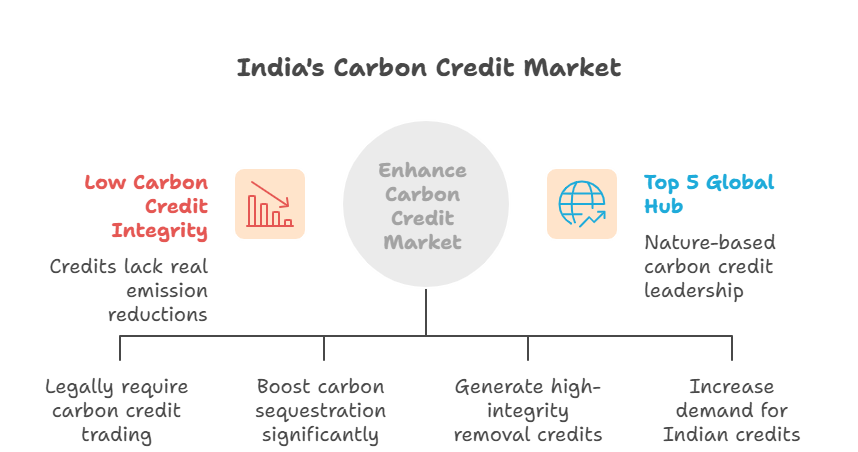
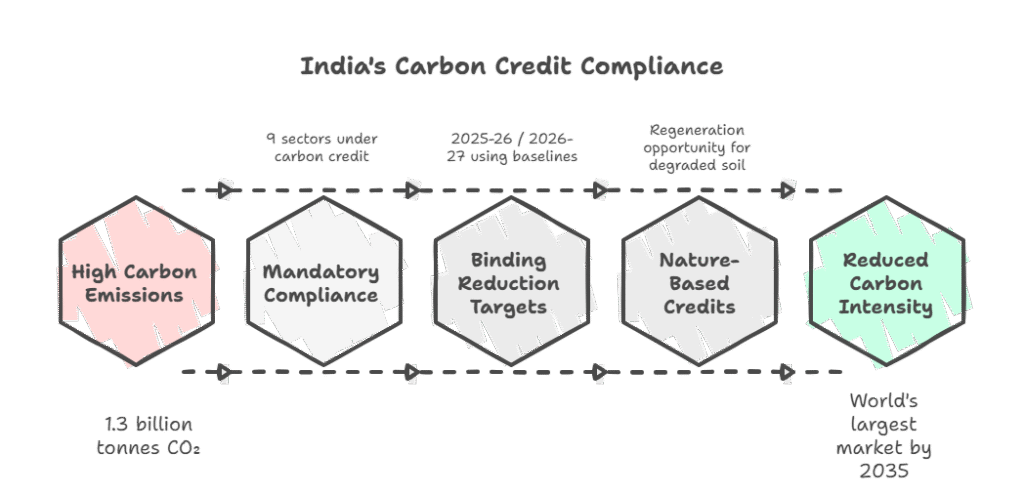
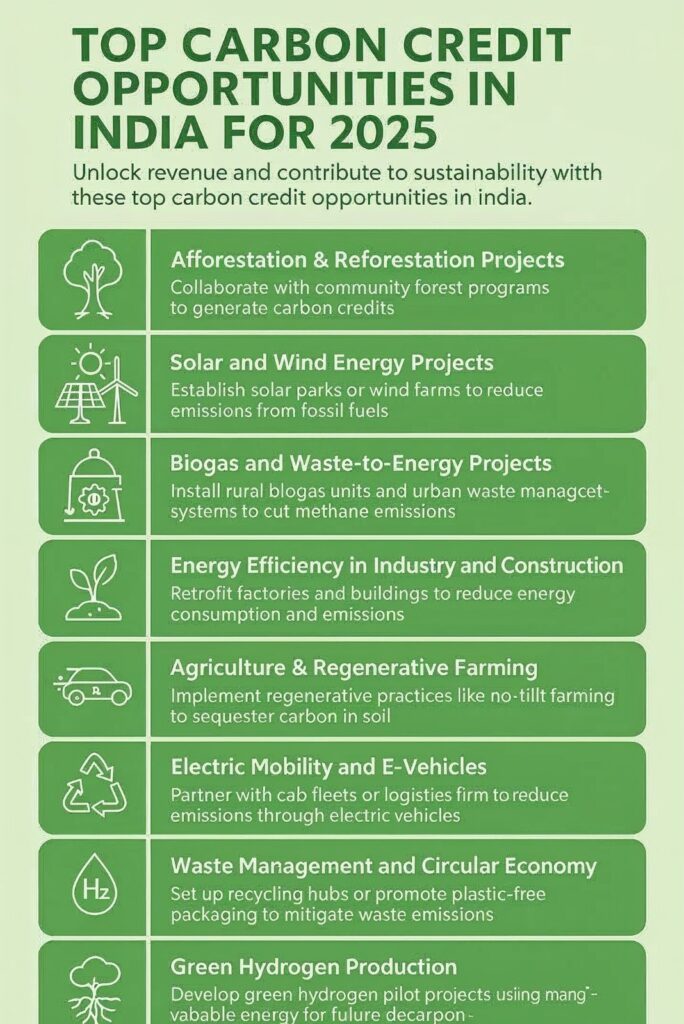
Carbon Credits Will Make Regenerative Farmland Profitable
The Ministry of Power has approved carbon market methodologies.
Soon, farmland may earn revenue for:
- Soil carbon
- Tree biomass
- Agroforestry
- Regenerative practices
That means:
Your land could earn money simply by healing itself.
Which urban apartment can do that?
Apartment vs Farmhome: A Brutally Honest Comparison
Mental Health
Apartment:
Noise, stress, traffic, confinement.
Farmhome:
Peace, sky, silence, breath, nature.
Physical Health
Apartment:
Processed food, delivered groceries, pollution.
Farmhome:
Organic produce, sun, clean air, movement.
Financial Health
Apartment:
Depreciating building, rising maintenance, uncertain rent market.
Farmhome:
Land appreciation + crop income + ecological value + rental retreat income.
Legacy
Apartment:
A structure that ages.
Farmhome:
An ecosystem that matures.
This is why more and more families see farmland is the new asset in India as the cornerstone of multi-generational wealth.
My Personal Framework (The KDR Lens)
Whenever I evaluate land, I look through 5 layers:
- Soil — Is it alive?
- Water — Is it sustainable?
- Access — Is it reachable?
- Ecology — Is it abundant?
- Community — Is it aligned?
Land is not a commodity for me.
Land is a relationship.
The Real Question: Which Life Are You Buying?
A 2BHK buys you:
- A container
- A commute
- A routine
- A dependency
- A depreciating structure
A farmhome buys you:
- A horizon
- Trees
- Oxygen
- Freedom
- Soil
- Food
- Water
- Legacy
- Identity
One asset shelters you.
The other transforms you.
FAQs
1. Why are more Indians choosing a farmhome over an apartment?
Many Indians are realising that an apartment is a depreciating structure, while farmland is a living, appreciating ecosystem. A farmhome gives you land, water, trees, silence, food production, and space — often for the same price as a 2BHK in a metro.
Apartments offer convenience, but farmland offers continuity. With rising urban stress, food inflation (RBI data), and climate-related anxiety, people are choosing land because it gives emotional stability along with financial returns. That’s why farmland is the new asset in India — it delivers multi-dimensional value beyond square feet.
2. Is farmland actually a good investment compared to an apartment?
Yes — especially over a 10–20 year horizon.
According to Times of India, farmland in many regions has appreciated 12–20% annually, while managed farmland models (Mint, ET Wealth) yield 10–15% returns.
Apartments, on the other hand, often plateau after the initial sales cycle, and buildings deteriorate over time. Farmland appreciates with ecological restoration, water security, and improved rural infrastructure — and it can produce income through crops, leasing, or nature-based tourism.
3. Can I legally buy farmland in India if I’m not a farmer?
Yes, in many states — with certain conditions.
States like Karnataka, Telangana, Tamil Nadu, and Rajasthan have relaxed old restrictions (ET Realty). However, rules vary widely.
The good news:
The Digital India Land Records Modernization Programme (DILRMP) has digitised 95%+ of rural land records, making the process safer than ever.
This increased transparency is a major reason farmland is the new asset in India for first-time buyers.
4. What are the biggest risks of buying farmland?
Farmland is powerful but not passive. Key risks include:
- Title clarity — mitigated today by digitised land records.
- Water availability — water defines future value.
- Climate vulnerability — CEEW reports 75% of districts are at risk.
- Operational challenges — land needs stewardship, not neglect.
- Unscrupulous sellers — must verify zoning, boundaries, and RoR.
With due diligence, these risks can be managed — but farmland rewards responsibility, not shortcuts.
5. How does a farmhome contribute to food and ecological security?
A farmhome can grow vegetables, fruits, herbs, and even grains depending on scale — giving your family direct access to fresh, chemical-free food.
Ecologically, a farmhome:
- Recharges groundwater
- Stores carbon through trees
- Supports biodiversity
- Reduces your reliance on fragile supply chains (FAO/UN data)
In a climate-stressed world, land that regenerates becomes priceless. This is one of the strongest reasons farmland is the new asset in India.
6. Can a farmhome generate income? How?
Yes — in several ways:
- Crop cultivation
- Agroforestry (fruit trees + timber + carbon)
- Farmstay rentals
- Leasing to local farmers
- Carbon credits (emerging under India’s carbon market framework)
A well-managed farmhome can earn both active (crops, rentals) and passive income (carbon credits, agroforestry yield).
7. Is farmland safer from inflation compared to urban property?
Absolutely.
Food inflation directly increases the value of agricultural land. RBI data shows India’s food inflation consistently high over the last several years.
Urban apartments, meanwhile, do not benefit from inflation — their maintenance costs rise while rental yields remain stagnant.
Farmland holds intrinsic value because it produces calories, not just currency. That is why farmland is the new asset in India during inflation cycles.
8. What determines the value of farmland long-term?
Five layers determine farmland value — my KDR Framework:
- Soil quality
- Water security
- Access and infrastructure
- Ecological resilience
- Community and local culture
If these five align, farmland becomes a generational asset.
If even one collapses, the value collapses with it.
9. Can a farmhome replace a primary residence?
Yes — for some families.
More Indians (especially hybrid workers) are shifting to primary living on farmland and keeping small city apartments for convenience.
With lifestyle migration, air quality concerns, and rising real estate prices, many people see a farmhome as a healthier, more sustainable place to raise children.
10. Are apartments still better for rental income than farmland?
Apartments can offer rental income, but yields are often 2–3% per year, barely covering maintenance.
A thoughtfully designed farmhome or farmstay can outperform this through:
- Eco-tourism
- Weekend rentals
- Retreat hosting
- Wellness experiences
Plus, farmland yields appreciation + ecological value — things an apartment cannot match.
11. How does climate change make farmland more valuable?
Climate change increases urban heat, raises food prices, strains supply chains, and makes water resources scarcer (World Bank).
Farmland with:
- water
- trees
- regenerative capacity
…becomes a climate haven.
As extreme weather intensifies, people are seeking nature-based living systems — positioning farmland as the new asset in India for climate-adapted wealth planning.
12. Should first-time investors consider farmland instead of a second apartment?
For many, yes.
A second apartment often brings:
- High EMI
- Low yield
- High maintenance
- Stressful tenants
A farmhome brings:
- Land appreciation
- Emotional ROI
- Access to nature
- Food security
- Carbon & ecological potential
- Health benefits
- A legacy to pass on
If your investment horizon is 10+ years, and if you desire a meaningful asset rather than a speculative one — farmland may offer far more value than a second flat.
The Future of Indian Wealth Is Returning to Its Oldest Form
After 25 years of building land ecosystems, I can say this with conviction:
Wealth does not lie in walls. Wealth lies in the soil.
When markets panic, the land remains calm.
When inflation rises, the land becomes valuable.
When cities choke, the land breathes.
When the world changes, the land remains.
This is why farmland is the new asset in India — not because it is fashionable, but because it is true.
A farmhome at the price of an apartment is not a choice between two properties.
It is a choice between two lifestyles, two philosophies, two futures.
And if you choose the soil —
I believe you are choosing a life your children will thank you for.