
Why Sindhudurg Is Moving from a Hidden Coastline to an Investment Watchlist
For decades, whenever conversations about India’s vagurla coastal destination growth stories emerged, destinations such as Goa, Alibaug, Kochi, and, more recently,, Gokarna dominated the discussion. Yet along Maharashtra’s Konkan coastline lies a district that has quietly preserved something many mature coastal destinations have lost—authenticity, ecological richness, and untapped potential.
As someone who has spent years studying sustainable development, land use patterns, emerging tourism destinations, and long-term wealth creation through responsible real estate, I believe Sindhudurg has entered a pivotal phase in its evolution.
The transformation is not being driven by speculation alone. It is being supported by improving connectivity, growing tourism interest, infrastructure investments, policy support, and a broader shift in how people want to travel, live, and invest.
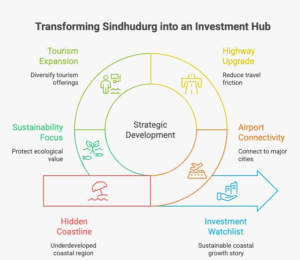
Today, Sindhudurg is gradually moving from a hidden coastline to an investment watchlist.
The opportunity, however, is not about chasing the next Goa. It is about understanding why this region may follow its own unique path—one that balances economic growth with environmental preservation.
Understanding Sindhudurg Beyond Tourism
Most people associate Sindhudurg with pristine beaches, Malvani cuisine, scuba diving, and the historic Sindhudurg Fort. While these attractions certainly contribute to its appeal, the district’s importance extends far beyond tourism.
According to the official Maharashtra Tourism Department, Sindhudurg possesses approximately 122 kilometers of coastline along the Arabian Sea and is home to ecologically significant marine ecosystems, including mangroves, coral reefs, rocky islands, estuaries, and coastal forests.
This natural capital is increasingly becoming an economic asset.
Globally, investors are paying greater attention to destinations where quality of life, environmental quality, tourism potential, and infrastructure development intersect. Sindhudurg sits precisely at that intersection.
Historically, the district’s economy relied heavily on fisheries, agriculture, horticulture, and income from migration. Large-scale tourism and institutional investment remained relatively limited due to accessibility constraints.
The Connectivity Revolution Is Reshaping Sindhudurg
When investors evaluate emerging regions, one factor consistently determines future growth trajectories: connectivity.
No destination can unlock its economic potential without reducing travel friction.
For years, reaching Sindhudurg required long road journeys or railway travel through the Konkan corridor. While the Konkan Railway significantly improved access during the late 1990s and early 2000s, air connectivity remained a missing piece.
The launch of Sindhudurg Investment Airport at Chipi fundamentally altered that equation.
What was once perceived as a remote coastal district is now increasingly accessible to travelers from Mumbai, Bengaluru, Hyderabad, and other urban centers.
Accessibility matters because tourism growth, hospitality investments, second-home demand, and entrepreneurial activity often follow transportation infrastructure.
We have witnessed similar patterns across India and globally.
Alibaug accelerated after improved connectivity to Mumbai.
North Goa expanded rapidly following aviation growth.
Gokarna gained momentum as highway and rail connectivity improved.
Sindhudurg appears to be entering a similar phase.
At the same time, the modernization of National Highway 66, connecting Mumbai and Goa through the Konkan region, is improving regional mobility and reducing travel times. These developments strengthen Sindhudurg’s integration into one of India’s most dynamic coastal corridors.
For investors, infrastructure is not merely about convenience. Infrastructure creates economic multipliers.
It increases visitor flows.
It expands labor mobility.
It improves logistics.
And ultimately, it influences land values.
Tourism Trends Strengthening the Sindhudurg Investment Watchlist
The tourism industry itself is undergoing structural change.
Travelers today are seeking experiences rather than destinations.
This distinction is important.
A growing number of domestic and international tourists are looking for:
- Less crowded beaches
- Authentic local culture
- Nature-based experiences
- Sustainable tourism options
- Wellness retreats
- Workcation destinations
- Adventure tourism
Sindhudurg aligns closely with these evolving preferences.
The official Department of Tourism Maharashtra – Sindhudurg highlights attractions such as Tarkarli, Devbag, Tsunami Island, Sindhudurg Fort, coastal biodiversity zones, marine ecosystems, and cultural heritage destinations.
Tarkarli in particular has emerged as one of Maharashtra’s most recognized marine tourism destinations, attracting visitors for scuba diving, snorkeling, dolphin safaris, and coastal experiences.
As I observe travel patterns across India, one trend is becoming increasingly clear.
Many travelers who once automatically chose Goa are now exploring alternative coastal destinations that offer tranquility, cleaner environments, lower density, and a stronger connection with nature.
Sindhudurg benefits directly from this shift.
The district is no longer competing solely with neighboring destinations.
It is increasingly participating in a broader movement toward experiential tourism.
The Maharashtra Tourism Policy Is Creating New Opportunities
Policy often acts as a catalyst that accelerates existing market trends.
The state’s tourism ambitions indicate growing institutional recognition of tourism as an economic driver.
According to reporting on the Maharashtra Tourism Policy 2024, the state aims to attract significant tourism investments and generate large-scale employment opportunities through destination development, tourism infrastructure, rural tourism, and hospitality expansion.
The policy also recognizes emerging trends such as:
- Workcations
- Rural tourism
- Eco-tourism
- Caravan tourism
- Experience-driven travel
These trends are particularly relevant for Sindhudurg.
Unlike highly urbanized tourism destinations, Sindhudurg still possesses substantial natural and cultural assets that can support sustainable tourism growth without relying exclusively on large-scale commercial development.
This distinction matters because future tourism demand increasingly favors authenticity over mass commercialization.
Why Investors Are Beginning to Watch Sindhudurg Investment
Every investment geography moves through stages.
The first stage is discovery.
The second is infrastructure development.
The third is investor recognition.
The fourth is widespread participation.
Many mature markets generate wealth during the later stages.
The largest opportunities often emerge during the transition between stages two and three.
In my view, Sindhudurg currently occupies that transitional space.
Several factors are contributing to investor interest:
Land Availability
Compared to many established coastal markets, Sindhudurg continues to offer relatively lower land acquisition costs in select micro-markets.
Tourism Growth
Tourism expansion creates demand for hospitality assets, vacation rentals, second homes, restaurants, and service businesses.
Infrastructure Expansion
Improved connectivity strengthens economic activity and accessibility.
Lifestyle Migration
An increasing number of professionals are exploring alternatives to congested metropolitan environments.
Long-Term Scarcity
Coastal land is a finite asset.
As infrastructure improves and tourism expands, scarcity often becomes a powerful driver of value creation.
However, investors must recognize that Sindhudurg remains an emerging market rather than a fully mature one.
Patience remains essential.
Hospitality May Become One of the Biggest Growth Stories
One of the most interesting developments I observe across emerging coastal destinations is the transformation of hospitality.
Travelers increasingly prefer:
- Boutique resorts
- Eco-retreats
- Wellness stays
- Luxury villas
- Homestays
- Experiential accommodations
This trend creates opportunities beyond conventional hotel development.
The growth of digital booking platforms and vacation rental ecosystems has democratized hospitality investment.
Today, smaller operators can reach national and international audiences without relying solely on traditional travel agencies.
For destinations like Sindhudurg, this is particularly important.
The region’s appeal lies not in large-scale urban tourism but in personalized experiences connected to nature, culture, and local identity.
Hospitality models that integrate sustainability, local employment, and environmental stewardship may prove especially resilient in the coming decade.
The Sustainability Advantage Few Investors Discuss
When discussing coastal investment opportunities, conversations often focus on appreciation potential.
I believe that perspective is incomplete.
The long-term success of any coastal destination depends on environmental sustainability.
Sindhudurg’s ecological assets are among its greatest strengths.
The district’s coastal ecosystem includes mangroves, coral reefs, estuaries, marine habitats, and biodiversity-rich landscapes. According to the official Maharashtra Tourism Department’s Sindhudurg profile, these ecosystems contribute significantly to the region’s environmental importance.
History offers important lessons.
Many coastal destinations worldwide experienced rapid economic growth but later faced challenges related to overdevelopment, environmental degradation, water stress, and infrastructure pressure.
Sindhudurg has an opportunity to pursue a different path.
A path where growth is guided by sustainability.
A path where ecological preservation becomes a competitive advantage rather than a constraint.
As an environmentalist and advocate for conscious development, I believe this approach creates stronger long-term value.
Healthy ecosystems support tourism.
Healthy ecosystems support local livelihoods.
Healthy ecosystems improve quality of life.
And increasingly, healthy ecosystems attract investment.
Comparing Sindhudurg with Other Coastal Growth Stories
Investors often ask whether Sindhudurg can become the next Goa.
I believe that is the wrong question.
The better question is:
Can Sindhudurg become the best version of itself?
Comparisons are useful for understanding patterns rather than predicting outcomes.
Goa benefited from decades of tourism development, aviation growth, hospitality expansion, and international visibility.
Alibaug gained momentum through improved connectivity and second-home demand.
Gokarna evolved through tourism-led discovery and boutique hospitality growth.
Sindhudurg shares characteristics with each of these destinations, yet it retains unique advantages.
Its coastline remains relatively less commercialized.
Its environmental resources remain significant.
Its tourism sector is still evolving.
Its growth trajectory remains open.
That flexibility can be valuable.
Risks Investors Should Evaluate Carefully
Every investment opportunity carries risk.
Sindhudurg is no exception.
Several considerations deserve careful evaluation.
Regulatory Environment
Coastal investments must comply with Coastal Regulation Zone regulations and environmental requirements.
Infrastructure Execution
Project announcements do not always translate into immediate outcomes.
Investors should monitor actual implementation.
Tourism Seasonality
Tourism revenues can fluctuate significantly across seasons.
Liquidity
Emerging land markets may offer lower liquidity than metropolitan regions.
Due Diligence
Title verification, zoning regulations, environmental compliance, and infrastructure assessments remain essential.
The most successful investors typically combine optimism with rigorous due diligence.
It could become a model for how India develops its next generation of coastal economies.
FAQ
1. Why is the Vengurla Coastal Destination gaining attention among investors?
The Vengurla Coastal Destination is attracting growing investor interest due to its strategic location within Sindhudurg district, improving connectivity through Sindhudurg Airport, upgrades to National Highway 66, expanding tourism infrastructure, and increasing demand for sustainable coastal living. Unlike mature coastal markets where entry costs are significantly higher, the Vengurla Coastal Destination remains relatively early in its development cycle, creating opportunities for long-term investors focused on infrastructure-led growth and tourism-driven economic expansion.
2. How does the Vengurla Coastal Destination compare with Goa from an investment perspective?
While Goa is a mature tourism and real estate market, the Vengurla Coastal Destination is still in its early growth phase. Goa experienced decades of infrastructure development, hospitality expansion, and tourism investment before becoming a premium coastal destination. The Vengurla Coastal Destination offers investors an opportunity to participate at an earlier stage, where future growth may be influenced by connectivity improvements, tourism diversification, and sustainable development initiatives.
3. What infrastructure projects are supporting the growth of the Vengurla Coastal Destination?
Several infrastructure developments are strengthening the investment outlook for the Vengurla Coastal Destination, including Sindhudurg Airport at Chipi, the modernization of National Highway 66, Konkan Railway connectivity improvements, and coastal tourism infrastructure projects. These developments are enhancing accessibility, reducing travel times, and supporting tourism, hospitality, and business activity throughout the region.
4. Is the Vengurla Coastal Destination suitable for long-term land investment?
The Vengurla Coastal Destination may appeal to long-term investors seeking exposure to emerging coastal markets. Factors such as finite coastal land availability, growing tourism demand, infrastructure expansion, and increasing awareness of Sindhudurg’s potential are contributing to investor interest. However, investors should conduct thorough due diligence regarding land titles, zoning regulations, CRZ guidelines, and development restrictions before making any investment decisions.
5. How is tourism contributing to the growth of the Vengurla Coastal Destination?
Tourism is becoming a major economic driver for the Vengurla Coastal Destination. Travelers are increasingly seeking authentic coastal experiences, marine tourism, wellness retreats, eco-tourism, and less crowded alternatives to traditional beach destinations. Attractions such as Vengurla Beach, Tarkarli, Devbag, Sindhudurg Fort, and Malvan are helping position the Vengurla Coastal Destination as a growing tourism hub on Maharashtra’s Konkan coast.
6. What role does sustainability play in the future of the Vengurla Coastal Destination?
Sustainability will be critical to the long-term success of the Vengurla Coastal Destination. The region contains ecologically sensitive assets including mangroves, coastal forests, marine ecosystems, and biodiversity-rich habitats. Responsible tourism, environmentally conscious development, and adherence to coastal regulations can help ensure that economic growth does not compromise the natural assets that make the Vengurla Coastal Destination attractive in the first place.
7. Can the Vengurla Coastal Destination become a major hospitality market?
The Vengurla Coastal Destination is witnessing increasing interest in boutique resorts, luxury villas, eco-retreats, homestays, and vacation rental properties. As tourism demand evolves toward personalized and experience-based travel, hospitality operators may find opportunities in the region. Growth in aviation connectivity and domestic tourism trends could further support hospitality expansion in the Vengurla Coastal Destination over the coming decade.
8. What risks should investors evaluate before investing in the Vengurla Coastal Destination?
Before investing in the Vengurla Coastal Destination, investors should carefully assess Coastal Regulation Zone (CRZ) requirements, infrastructure execution timelines, market liquidity, tourism seasonality, environmental compliance obligations, and legal ownership documentation. Like any emerging market, the Vengurla Coastal Destination offers opportunities but also requires a long-term investment horizon and detailed due diligence.
9. Why are HNIs and NRIs beginning to explore the Vengurla Coastal Destination?
Many HNIs and NRIs are increasingly looking beyond traditional investment locations toward destinations that combine lifestyle benefits, environmental quality, and long-term growth potential. The Vengurla Coastal Destination offers a combination of natural beauty, improving infrastructure, tourism potential, and lower-density living, making it an attractive location for second homes, hospitality ventures, and long-term land ownership.
10. What could the Vengurla Coastal Destination look like over the next 10 years?
Over the next decade, the Vengurla Coastal Destination could experience growth across tourism, hospitality, infrastructure, and sustainable real estate sectors. The completion of announced infrastructure projects, continued tourism promotion, and responsible coastal development policies may strengthen the region’s economic profile. If environmental preservation remains a priority alongside development, the Vengurla Coastal Destination could emerge as one of Maharashtra’s most desirable coastal growth corridors.
The Next Decade for Sindhudurg
When I look at Sindhudurg today, I see a district standing at an inflection point.
Improved accessibility.
Growing tourism interest.
Policy support.
Rising awareness.
Infrastructure investment.
Environmental significance.
These factors rarely emerge simultaneously.
Yet they are converging here.
Over the next five to ten years, I expect continued growth in:
- Coastal tourism
- Boutique hospitality
- Vacation rentals
- Eco-tourism
- Sustainable real estate
- Experience-based businesses
I also believe environmental stewardship will increasingly shape investment outcomes.
Destinations that preserve their ecological identity are likely to remain attractive longer than those that sacrifice natural assets for short-term gains.
For many years, Sindhudurg remained one of India’s best-kept coastal secrets.
Today, that secrecy is gradually giving way to recognition.
Not because of hype.
Not because of speculation.
But because underlying fundamentals are changing.
The district’s strategic location, improving connectivity, tourism potential, ecological richness, and policy support are collectively moving Sindhudurg onto the radar of investors, entrepreneurs, policymakers, and long-term wealth creators.
As I study emerging destinations across India, one lesson consistently stands out:
The most sustainable opportunities often emerge before mainstream attention arrives.
Sindhudurg may still be early in its journey.
Yet the signals are becoming increasingly difficult to ignore.
The future of this coastline will ultimately depend on how thoughtfully development is pursued.
If growth is guided by sustainability, environmental responsibility, and long-term vision, Sindhudurg may not simply become another coastal destination.
