

The Future of Tourism Is Experience-Led: Why Vengurla Fits the Trend
Tourism Is No Longer About Places—It Is About Experiences
Over the years, I have observed a profound shift in how people choose to travel. Destinations that once attracted visitors purely because of their landmarks, beaches, or monuments are now facing a new reality. Travelers are increasingly searching for something deeper—something more personal, meaningful, and transformative.
As an environmentalist, entrepreneur, urban farmer, and sustainability advocate, I believe this change represents more than a tourism trend. It reflects a broader shift in human priorities. People today are looking for experiences that connect them with nature, local communities, wellness, culture, and authentic ways of living.
The global tourism industry is responding rapidly to this transformation. According to the latest reports from the UN Tourism (UNWTO), international tourism has not only recovered from the pandemic but is evolving toward more experience-driven travel patterns. Similarly, the World Travel & Tourism Council (WTTC) projects continued growth in travel spending, with travelers increasingly prioritizing meaningful experiences over traditional sightseeing.
This shift has given rise to what is now commonly referred to as experiential or experience-led tourism.
When viewed through this lens, Experience-Led Tourism in Vengurla becomes particularly relevant.
Unlike destinations that were built around mass tourism, Vengurla offers something increasingly rare in today’s world: authenticity. Its untouched coastline, cultural richness, biodiversity, slower pace of life, and emerging infrastructure align remarkably well with the future direction of global tourism.
The question is no longer whether tourism will continue to grow.
The more important question is where future travelers will choose to spend their time—and why.
The Great Transformation of Global Tourism
For decades, tourism was largely destination-centric.
Travelers visited famous locations, checked landmarks off their bucket lists, captured photographs, and moved on to the next destination.
Today, that model is changing.
Research from Booking.com Travel Predictions shows that modern travelers increasingly prioritize emotional fulfillment, local interactions, cultural immersion, wellness, and sustainability when making travel decisions.
Travel is becoming less about “seeing” and more about “experiencing.”
This evolution is particularly evident among:
- Millennials
- Generation Z travelers
- High-Net-Worth Individuals (HNIs)
- NRIs
- Digital nomads
- Wellness travelers
- Long-stay visitors
According to the McKinsey Travel Industry Research Center, experience-seeking travelers are becoming one of the fastest-growing segments within global tourism.
The reasons are not difficult to understand.
Modern life has become increasingly digital, fast-paced, and disconnected from nature.
Travel now serves as a way to reconnect with experiences that people feel they are missing in their daily lives.
These include:
- Human connection
- Nature
- Culture
- Wellness
- Simplicity
- Local authenticity
This is precisely why destinations that were once overlooked are beginning to attract attention.
And this is where Experience-Led Tourism in Vengurla enters the conversation.
Why Experience-Led Tourism Is Becoming the Dominant Travel Trend
The tourism industry is witnessing a major behavioral shift.
Travelers are increasingly asking:
- Can I live like a local?
- Can I learn something meaningful?
- Can I slow down?
- Can I disconnect from stress?
- Can I experience nature authentically?
These questions define the experience economy.
According to research published by Deloitte Insights Travel Studies, travelers increasingly evaluate destinations based on experiences rather than attractions.
The implications are significant.
Destinations that offer authenticity, culture, wellness, sustainability, and environmental quality are gaining a competitive advantage.
This explains the growing popularity of:
- Wellness retreats
- Eco-resorts
- Agritourism
- Slow travel destinations
- Nature-based tourism
- Community-led tourism
- Boutique hospitality
The tourism economy is evolving from destination consumption to experience participation.
In my view, this shift will define the next decade of global tourism growth.
The Mega Trends Reshaping Global Travel
1. Slow Travel Is Replacing Fast Tourism
One of the most important developments in modern tourism is the rise of slow travel.
Instead of visiting multiple destinations in a short period, travelers increasingly prefer spending longer periods in fewer places.
This approach allows deeper engagement with:
- Local culture
- Nature
- Food
- Communities
The rise of remote work has accelerated this trend.
People are no longer traveling merely for vacations.
They are traveling to live differently, even if only temporarily.
This creates opportunities for destinations that offer tranquility, authenticity, and quality of life.
Many of these characteristics are already present in Experience-Led Tourism in Vengurla.
2. Wellness Tourism Is Growing Rapidly
The global wellness economy continues to expand.
According to the Global Wellness Institute, wellness tourism remains one of the fastest-growing segments of the travel industry.
Travelers increasingly seek:
- Yoga retreats
- Meditation programs
- Nature therapy
- Coastal wellness experiences
- Mental health retreats
- Digital detox vacations
India is particularly well-positioned within this trend because of its cultural heritage and natural diversity.
Coastal destinations that offer peace, clean environments, and natural beauty are increasingly attracting wellness-focused travelers.
This creates long-term opportunities for regions that can support responsible wellness infrastructure.
3. Nature-Based Tourism Is Becoming a Premium Experience
A decade ago, luxury tourism was often associated with extravagant infrastructure.
Today, luxury increasingly means access to nature.
Travelers are willing to pay premium prices for experiences that include:
- Uncrowded beaches
- Forest ecosystems
- Wildlife encounters
- Marine biodiversity
- Scenic landscapes
Research from UN Tourism Sustainable Development Resources highlights growing global demand for nature-based tourism experiences.
This trend is especially relevant for coastal regions with relatively untouched ecosystems.
4. Cultural Immersion Is Replacing Generic Tourism
Authenticity has become a tourism asset.
Travelers increasingly seek:
- Local festivals
- Traditional cuisine
- Heritage experiences
- Community interaction
- Cultural storytelling
According to Airbnb Travel Trends, travelers increasingly prioritize destinations that offer authentic local experiences rather than standardized tourism products.
This trend favors destinations where culture remains embedded in daily life.
5. Sustainable Tourism Is Becoming Mainstream
One of the most significant tourism developments today is the growing awareness of sustainability.
According to Booking.com’s sustainability research, travelers are becoming increasingly conscious of tourism’s impact on local communities and ecosystems.
Travelers increasingly want to know:
- Does tourism benefit local communities?
- Is the environment protected?
- Are cultural traditions preserved?
- Is growth occurring responsibly?
These questions are reshaping tourism investment and destination development strategies worldwide.
Why Sustainability Will Define Future Tourism Winners
As someone deeply committed to environmental stewardship, I believe sustainability is no longer optional.
Destinations around the world are facing the consequences of unmanaged tourism growth.
Examples include:
Venice
Overtourism has strained infrastructure and impacted the local quality of life.
Bali
Rapid tourism growth has created challenges related to waste management, traffic congestion, and environmental degradation.
Phuket
Mass tourism has placed pressure on marine ecosystems and coastal environments.
Goa
Growing visitor volumes have contributed to congestion, rising land costs, and increasing environmental pressures.
These examples demonstrate an important lesson:
Tourism growth without environmental stewardship eventually undermines the very assets that attract visitors.
The future belongs to destinations that grow responsibly.
Why Experience-Led Tourism in Vengurla Aligns With Global Tourism Trends
This brings us to an important question.
What characteristics will define successful tourism destinations over the next decade?
In my view, they include:
✓ Authenticity
✓ Environmental quality
✓ Wellness appeal
✓ Nature access
✓ Cultural richness
✓ Community participation
✓ Sustainability potential
✓ Accessibility
Vengurla possesses many of these attributes naturally.
Located along Maharashtra’s southern Konkan coastline within the Sindhudurg region, Vengurla offers a rare combination of environmental and cultural assets that increasingly align with modern travel preferences.
Unlike many mature tourism markets, Vengurla remains relatively uncrowded.
Its value lies not in large-scale commercialization but in the experiences it enables.
This is what makes Experience-Led Tourism in Vengurla an important case study in the future of tourism.
In the next section, I will explore how Vengurla’s geography, culture, biodiversity, infrastructure development, and tourism ecosystem position it within the broader evolution of global travel behavior.
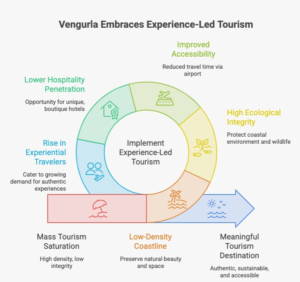
Why Vengurla Is Naturally Positioned for the Future of Tourism
One of the reasons I find Experience-Led Tourism in Vengurla particularly compelling is that it aligns with many of the forces reshaping global travel without needing to reinvent itself.
Many destinations invest heavily in creating experiences. Vengurla already possesses many of the ingredients modern travelers seek.
Situated along Maharashtra’s southern Konkan coastline within the Sindhudurg district, Vengurla benefits from a unique combination of geography, culture, biodiversity, and relative anonymity.
As travelers increasingly seek alternatives to crowded tourism hubs, destinations like Vengurla are becoming more relevant.
The appeal lies not in large-scale attractions but in the quality of experiences available.
Geography as a Competitive Advantage
Throughout history, geography has played a crucial role in determining tourism success.
In the case of Vengurla, geography creates several natural advantages:
- Arabian Sea coastline
- Scenic beaches
- Coastal hills
- Cashew plantations
- Mango orchards
- Fishing villages
- Rich biodiversity
Unlike heavily urbanized tourism destinations, Vengurla still retains a strong connection to its natural environment.
This aligns closely with the growing global demand for nature-based tourism.
As travelers increasingly prioritize experiences over attractions, natural landscapes become tourism assets rather than undeveloped land.
The Value of Uncrowded Coastal Experiences
One of the defining characteristics of modern tourism is the search for space.
Many travelers are actively avoiding overcrowded destinations.
This trend accelerated after the pandemic and continues today.
In numerous global travel surveys, travelers consistently express interest in:
- Less crowded beaches
- Nature-oriented experiences
- Smaller destinations
- Local communities
- Slower lifestyles
This is where Experience-Led Tourism in Vengurla becomes particularly relevant.
Unlike mature coastal destinations that struggle with tourist density, Vengurla still offers a sense of discovery.
For many modern travelers, that feeling is becoming increasingly valuable.
Culture as an Experience Asset
Tourism is no longer only about landscapes.
Culture increasingly shapes destination competitiveness.
The Sindhudurg region offers:
- Malvani traditions
- Local festivals
- Fishing communities
- Heritage temples
- Coastal lifestyles
- Traditional craftsmanship
According to trends highlighted by:
travelers increasingly seek authentic cultural experiences rather than standardized tourism offerings.
This shift favors destinations where culture remains a living part of everyday life.
Vengurla possesses this advantage naturally.
Culinary Tourism and the Experience Economy
Food is becoming one of the most influential drivers of travel decisions.
Today’s travelers increasingly choose destinations based on culinary experiences.
The Konkan coast offers:
- Malvani seafood cuisine
- Coconut-based dishes
- Traditional recipes
- Cashew products
- Alphonso mango experiences
- Farm-to-table dining
Research consistently shows that local cuisine enhances visitor engagement and extends tourism spending across communities.
As experience-driven travel grows, culinary tourism may become one of the strongest pillars supporting Experience-Led Tourism in Vengurla.
Tourism Infrastructure and Connectivity: Enabling the Next Phase of Growth
While authentic experiences attract visitors, accessibility determines whether destinations can capitalize on tourism opportunities.
Infrastructure development often acts as the bridge between tourism potential and tourism growth.
Improved Air Connectivity
One of the most significant developments in the Sindhudurg region has been improved airport connectivity.
The emergence of regional aviation infrastructure is helping reduce travel barriers for:
- Domestic tourists
- NRIs
- HNIs
- Weekend travelers
- Business owners
- Hospitality investors
The Government of India’s regional connectivity initiatives continue to strengthen access to emerging tourism destinations.
Official updates can be found through:
Ministry of Civil Aviation India
Road Infrastructure Improvements
Connectivity is no longer defined solely by airports.
Road infrastructure improvements are equally important.
Projects involving:
- NH-66 upgrades
- Konkan coastal connectivity
- Regional road improvements
are helping improve travel efficiency throughout the coastal belt.
Infrastructure announcements and updates can be tracked through:
Ministry of Road Transport and Highways
Better connectivity often acts as a catalyst for tourism growth, hospitality development, and broader economic activity.
The Goa Spillover Effect
One of the most interesting tourism dynamics unfolding in western India is what I call the “Goa Spillover Effect.”
Goa remains one of India’s most recognized tourism destinations.
However, success often creates new challenges.
These include:
- Rising land costs
- Congestion
- Infrastructure pressure
- Commercialization
- Environmental stress
As destinations mature, travelers often begin exploring nearby alternatives.
This pattern has been observed globally.
Vengurla’s proximity to Goa positions it to benefit from travelers seeking similar coastal experiences with greater authenticity and lower saturation levels.
Competitive Analysis: How Does Vengurla Compare?
To understand the long-term potential of Experience-Led Tourism in Vengurla, it is useful to compare it with other coastal destinations.
Factor | Goa | South Goa | Gokarna | Alibaug | Vengurla |
Tourist Saturation | Very High | Moderate | Rising | High | Low |
Commercialization | High | Moderate | Growing | High | Low |
Authenticity | Moderate | Good | Strong | Moderate | Very Strong |
Environmental Pressure | High | Moderate | Increasing | Moderate | Relatively Low |
Land Availability | Limited | Limited | Limited | Limited | Better Availability |
Wellness Tourism Potential | High | High | High | Moderate | High |
Sustainability Potential | Moderate | Moderate | High | Moderate | Very High |
Future Tourism Upside | Mature Market | Mature Market | Growing Market | Established Market | Emerging Market |
Lessons from Goa
Goa’s tourism success provides valuable lessons.
Tourism can generate:
- Employment
- Entrepreneurship
- Infrastructure
- Regional growth
However, Goa also demonstrates the risks of unmanaged growth.
Overtourism can lead to:
- Ecosystem degradation
- Traffic congestion
- Rising costs
- Loss of local identity
Emerging destinations have an opportunity to learn from these experiences.
Why Emerging Destinations Often Create Long-Term Value
Historically, some of the most successful tourism investment opportunities emerge before destinations become mainstream.
Investors who understand tourism cycles often focus on:
- Infrastructure improvements
- Visitor trends
- Emerging demand
- Sustainability factors
- Long-term positioning
This is not about predicting rapid growth.
It is about recognizing structural shifts.
The rise of Experience-Led Tourism in Vengurla reflects one such structural shift.
The Investor Perspective: Following Tourism Before Capital Flows
Tourism is often an early indicator of broader regional transformation.
When visitors begin spending more time in a destination, several economic effects follow:
- Hospitality demand increases
- Local entrepreneurship expands
- Infrastructure investment rises
- Employment opportunities grow
- Regional visibility improves
According to the:
World Travel & Tourism Council (WTTC) Economic Research
tourism remains one of the world’s largest economic sectors and continues to influence regional development.
For investors, tourism trends often provide valuable insights into future economic activity.
The Rise of Experience-Based Hospitality
Hospitality itself is changing.
Travelers increasingly seek:
- Boutique resorts
- Wellness retreats
- Eco-resorts
- Homestays
- Nature retreats
- Curated local experiences
Research from:
Deloitte Travel and Hospitality Insights
indicates growing demand for differentiated hospitality experiences.
The experience economy is reshaping accommodation preferences globally.
Can Tourism Growth and Environmental Preservation Coexist?
This is perhaps the most important question facing tourism today.
As someone deeply committed to sustainability, I believe tourism growth must never come at the expense of environmental degradation.
The destinations that succeed in the future will likely be those that protect their natural assets rather than exploit them.
Why Responsible Coastal Development Matters
Coastal ecosystems are among the most environmentally sensitive landscapes in the world.
These ecosystems provide:
- Biodiversity
- Climate resilience
- Livelihood support
- Carbon sequestration
- Tourism value
Responsible development must prioritize:
- Ecological preservation
- Environmental carrying capacity
- Sustainable infrastructure
- Community participation
The principles outlined by:
UN Tourism Sustainable Development Program
offer useful guidance for balancing tourism growth with environmental stewardship.
The Future Belongs to Value-Based Tourism
For decades, tourism success was measured by visitor numbers.
Increasingly, success is being measured differently.
Future tourism destinations will likely be evaluated based on:
- Visitor quality
- Sustainability outcomes
- Community benefits
- Environmental preservation
- Economic resilience
This represents a significant shift.
The future belongs not to destinations that attract the most tourists, but to destinations that create the most meaningful value.
What Experience-Led Tourism in Vengurla Reveals About the Future of Tourism in India
When I look at the future of tourism in India, I see a growing preference for destinations that offer authenticity, sustainability, wellness, and meaningful engagement.
The tourism economy is evolving.
Travelers are seeking:
- Experiences over attractions
- Wellness over excess
- Nature over congestion
- Authenticity over commercialization
In many ways, Experience-Led Tourism in Vengurla reflects these broader changes.
The destination’s relevance is not simply about geography.
It is about alignment with the future direction of global travel.
Key Takeaways
- Global tourism is shifting from sightseeing to experience-driven travel.
- Wellness, sustainability, and authenticity are becoming major travel drivers.
- Nature-based tourism continues to gain importance worldwide.
- Emerging destinations may benefit from changing traveler preferences.
- Responsible tourism development creates long-term economic and environmental value.
- Improved connectivity is enhancing accessibility across Sindhudurg.
- Experience-Led Tourism in Vengurla aligns naturally with multiple global tourism trends.
- Future tourism growth will increasingly favor destinations that balance preservation with progress.
Conclusion
As I observe the evolution of tourism across India and around the world, one trend becomes increasingly clear: the future of travel will belong to destinations that offer meaningful experiences rather than mass consumption.
Travelers today seek more than attractions.
They seek connection.
Connection with nature.
Connection with culture.
Connection with communities.
And perhaps most importantly, connection with themselves.
This is why the conversation around Experience-Led Tourism in Vengurla is larger than a single destination.
It represents a broader shift in how tourism is being redefined.
The destinations that thrive in the coming decades may not necessarily be the most developed or the most commercialized.
They may be the destinations that remain most authentic, most sustainable, and most deeply connected to the natural and cultural landscapes that make them unique.
In that context, Vengurla is not simply participating in the future of tourism.
It reflects many of the qualities that future tourism itself is likely to value most.
FAQs
1. What is Experience-Led Tourism in Vengurla?
Experience-Led Tourism in Vengurla focuses on authentic travel experiences centered around nature, culture, wellness, local communities, and sustainable tourism.
2. Why is experience-led tourism becoming popular?
Travelers increasingly seek meaningful experiences, cultural immersion, wellness, and nature-based activities rather than traditional sightseeing.
3. How is Vengurla different from Goa?
Vengurla offers a less crowded environment, stronger authenticity, lower commercialization, and significant sustainability potential.
4. Is Vengurla suitable for wellness tourism?
Yes. Its coastal environment, natural landscapes, and peaceful atmosphere support wellness-focused travel experiences.
5. What role does sustainability play in modern tourism?
Sustainability helps preserve ecosystems, support communities, and ensure long-term tourism viability.
6. Why are travelers choosing slow travel experiences?
Slow travel allows deeper cultural engagement, relaxation, and more meaningful destination experiences.
7. What is nature-based tourism?
Nature-based tourism focuses on experiences involving natural landscapes, biodiversity, wildlife, and outdoor recreation.
8. How does tourism contribute to economic growth?
Tourism generates employment, supports local businesses, attracts investment, and stimulates infrastructure development.
9. What opportunities exist in Sindhudurg tourism?
Hospitality, wellness retreats, eco-tourism, culinary tourism, and community-led tourism present emerging opportunities.
10. Why is responsible coastal development important?
It protects sensitive ecosystems while supporting sustainable economic growth and tourism development.
